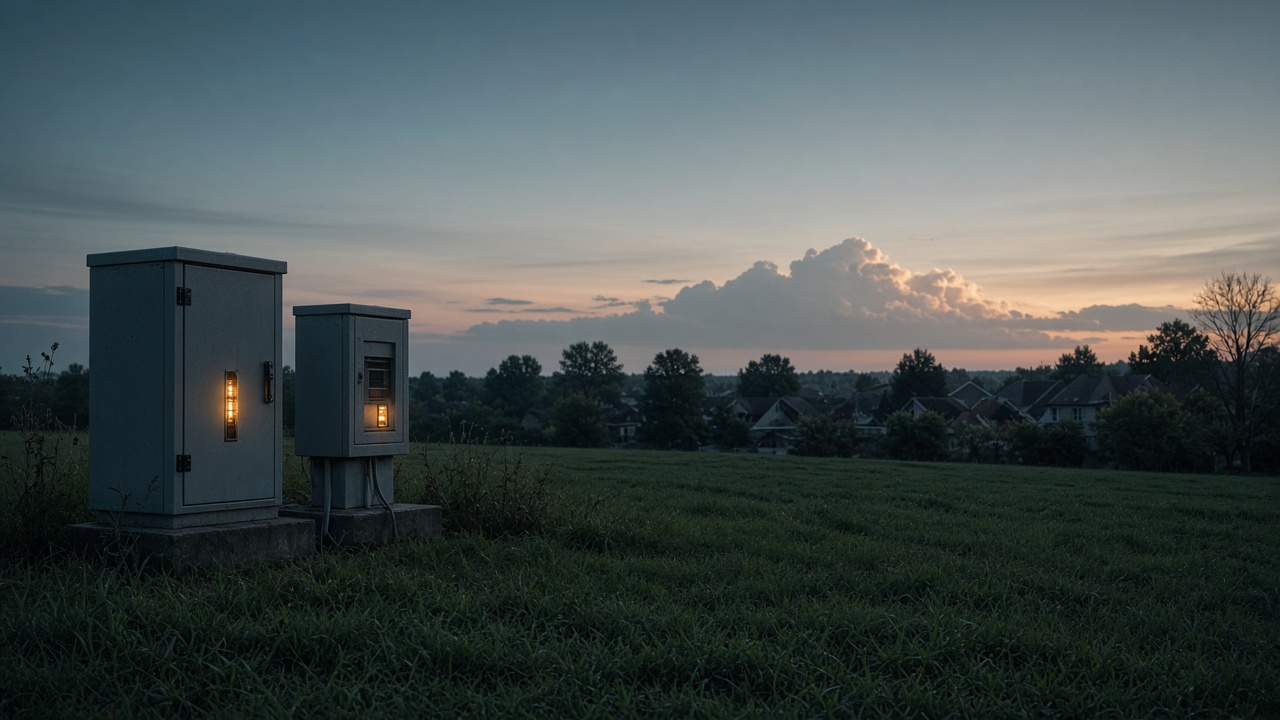
The edge is a place for some work, not a product to buy. Distributed capacity is many consented routes. They meet on a public-web fetch, not a home GPU. Source discipline: operating facts, planned products and variables are distinguished. Roadmap items may change.
01 · COMPLETE GUIDE
What is the edge, if it is not something you can order?
The edge is a place for some work, not a MetaEdge product you can order. It names where a task sits: nearer the people, networks and devices involved than a single remote region would be. A public page that must be seen as an ordinary visit from a given city, a check that fails from a datacenter address, or a result that should reflect a real local connection, all have a reason to be attempted closer to that place. Wider industry writing also uses the word for storage and for processing on nearby machines. This cluster starts with place, because place is already part of access routes. A brand, a box and a processor do not convert a location into a unit you add to a cart.
The edge remains a location even when the work is ordinary access rather than a calculation. Fetching a public page, keeping a session on an address a site will accept, and returning the response for structuring are jobs of reach. They can be done from a datacenter path, a partner path or, later, a residential connection that fits. MetaEdge describes route management as part of a platform operating since 2023. That description does not say the company sells an edge appliance, a home server or a GPU. If a sentence needs a device in the kitchen to make sense, it has left the meaning this page is willing to use.
Calling the place an edge does not put the place on sale. You cannot order the edge from MetaEdge in the introduction material, and you are not asked to buy hardware in order to understand the word. The useful question is which work actually benefits from being closer, and which work still belongs in ordinary cloud regions because it is dense and predictable. Training a large model is not the same job as reaching a page that changed this morning. Keeping those jobs apart stops a location strategy from being advertised as a gadget. The page you are reading is an explanation of place, not a checkout.
02 · COMPLETE GUIDE
What is distributed capacity, if it is not a processor in every home?
Distributed capacity, in this cluster, is many consented routes, not a processor installed in every home. Each route is a path an approved request may take when the connection fits the job. The connections can include datacenter paths, partner paths and, in the planned household layer, residential lines whose adults have opted in. Quiet lines are not selected merely because they are quiet. They are selected only if an approved public-web task needs that place, that address quality and that moment. Capacity that nobody has agreed to offer is not distributed capacity. It is simply someone else’s connection, and it stays outside the definition used on this page.
A route becomes capacity only after consent, eligibility and a real fit, and a processor is not a substitute for those three. Age, local law, the provider’s contract, device type, address reputation and uptime can all decide whether a connection may carry work. MetaEdge states an age floor of 18. A shared flat or a family line is a shared decision. Children are not the operators. The described household software, when the layer is offered, is a controllable extension or desktop node, paused or removed by the adult. Until The NEST exists where you live, these sentences describe a plan for routes, not a fleet of chips already running in kitchens.
Many routes together are still not a market size, a salary or a guarantee of use. Demand is uneven. A city, a reputation or a time of day that no buyer needs will produce no fetch and no record. MetaEdge has not published a rate card, and this page will not invent the missing number or a share of any industry. Spare transfer capacity is room on a connection, measured against what local devices are already moving. It is not a file, a browsing history or a second subscription. Distributed, in this sentence, means many consented paths. It does not mean a coin, a scoreboard or a promise that every path will be busy.
03 · COMPLETE GUIDE
Where do the two ideas actually meet?
They meet when an approved public-web request is fetched on a suitable route and turned into a usable record. The edge answers where that fetch has a reason to occur. Distributed capacity answers which consented paths can carry it. Orchestration matches a workload, such as a region, a set of public addresses, a freshness need and a compliance boundary, to supply that fits. After the response arrives, the useful object is structured: fields a warehouse, an analyst or an agent can load. The household, if it is involved at all, is a possible origin of the path. It is not the author of the record and not the owner of the customer’s file.
The meeting stays incomplete if you keep only the place or only the paths. A location strategy with no eligible route does not retrieve a page. A pile of connections with no approved job does not become a product. MetaEdge’s account of the live platform is that collection, route management and structured delivery already serve enterprise web data. Residential supply through The NEST would be an expansion of where some routes can start, planned for 2026, not the invention of the record. Datacenter and partner routes can already carry approved requests. The edge thesis does not require every fetch to begin in a living room.
A usable record is the point of the meeting, and a raw page is not yet that record. Prices, passages, timestamps and placement evidence have to be pulled into fields a system can trust. That work happens after the response, on the operator’s side of the loop. It does not require a contributor to understand the customer’s model, and it does not require a GPU under the contributor’s desk. MetaEdge describes the separation: the customer receives a structured payload, and personal files stay out of the path. Those are design claims to read against final documents. They are also the reason a chip in the home is the wrong picture of the handoff.
04 · COMPLETE GUIDE
What is operating today, and what stays on a later roadmap?
What is operating, in the company’s account, is a web-data business and its access routes, described as running since 2023. The work is collecting public-web information, managing the paths used to reach it, and delivering structured records to enterprise customers. That demand side does not wait for a household node. An enterprise can buy the data service without anyone at home installing software. This page treats that sentence as the present tense. It does not treat a roadmap slide as a second present tense. If a buyer asks what can be purchased now, the honest answer is the data and route platform, not a household edge computer.
The NEST is planned for 2026, and that date is a household participation plan, not an operating claim about processors. Eligible adults would be able to opt in and contribute spare transfer capacity through software they can pause or remove. A reward would be possible only if paid demand actually uses that capacity, under final terms, and it would remain variable. No public rate card appears in the introduction material. Until the layer is offered where you live, articles in this cluster are explanations, not installers. Mixing 2026 with the 2023 platform makes both the live business and the plan harder to trust.
CPU and GPU contribution is a later roadmap item, not an operating claim. The materials label storage and compute as 2027 intentions, and robotics further out, each with different hardware, risk and consent. Those years are not the bandwidth product and not the web-data product. A page that collapses 2023, 2026 and 2027 into one sentence is selling a stack the documents have kept in order. MetaEdge does not ask you to install a GPU worker in order to understand routes. If a screen cannot tell you whether you would be sharing connectivity or contributing compute, it is not ready for a household or for a procurement checklist.
05 · COMPLETE GUIDE
Why does a household GPU fail to complete the meeting?
A household GPU fails to complete the meeting because the meeting is a fetch and a record, not a chip. Putting a processor in a home does not, by itself, reach a public page, satisfy a site that refuses datacenter addresses, or structure the response into fields a customer can use. It also does not create consent. A machine that is merely powered on has not agreed to carry approved traffic, and a machine the resident cannot stop is outside the control this cluster describes. Compute can matter for models. It is a different layer from the route that keeps a public fact current enough to use.
Edge compute can be a serious later idea and still be the wrong description of today’s routes. Latency, local data and devices in the physical world are real reasons the industry talks about processing nearer the source. MetaEdge’s materials place that possibility after connectivity, with separate consent and unpublished final economics. An AI buyer does not need a household GPU to receive a structured public page from the platform described as live. A household does not need to promise processing power to understand why a suitable route matters. Treating the later idea as the current product is how a roadmap gets mistaken for something you can already buy.
Imagining a GPU in every home also invents a scale this page will not state. No count of devices, no share of cloud spend and no household income follows from the definition of a route. Rewards stay variable and can be zero for a period when demand does not select the connection. That is an infrastructure fact about uneven work, not a forecast and not financial advice. People who need a definite sum should not convert a roadmap chip into a plan for rent. People who want the concept can stop at the accurate meeting: approved request, suitable consented route, usable record.
06 · COMPLETE GUIDE
Which limits should stay attached to this explanation?
The limits that should stay attached are variable rewards, an age floor and a refusal to invent a market. A reward is a possible settlement only if paid demand uses eligible capacity, under final terms. It can be small. It can be zero. It is not a wage, a yield or advice about money. MetaEdge may mention USDT or tokens as a possible rail if a planned node is used. Naming a rail is not naming a price. Anyone who attaches a fixed monthly figure, or a market size, to this edge story is adding a number the introduction material does not contain, and this page will not repeat it.
Participation, when a market offers it, is for adults aged 18 and over, and the offer is not global today. The NEST is a 2026 plan, not a live consumer app you can treat as already installed. Children are not operators, even in a curious household. Other adults who share the line should agree before any later opt-in. The provider’s contract may forbid the use. A metered plan can be spent by traffic the household did not start for itself. Those checks belong to the route, which is the capacity this page actually describes. They are not solved by moving a GPU closer to the sofa.
No market size belongs here, because this site has not established one, and the explanation does not need one. The operational claim is narrower and more useful. Edge is a place for some work. Distributed capacity is many consented routes. They meet when an approved public-web request is fetched on a suitable route and turned into a usable record. MetaEdge’s web-data and access-route business is described as operating since 2023. Household supply is planned for 2026. CPU and GPU contribution remains a later roadmap item. If a sentence cannot survive that order, it does not belong in this cluster, and it is not financial advice.
FAQ
Questions, answered
Is the edge a MetaEdge product I can buy?+
No. The edge is a place for some work. MetaEdge’s current business is web data and access routes, described as operating since 2023. The introduction material does not offer an edge appliance to order.
Do these ideas meet by putting a GPU in every home?+
No. They meet when an approved public-web request is fetched on a suitable consented route and turned into a usable record. CPU and GPU contribution is a later roadmap item, not an operating claim.
What is distributed capacity here?+
It is many consented routes that may carry approved public-web requests when they fit. It is not personal files, not a token and not a processor in every kitchen. A quiet line is not selected merely because it is quiet.
Is The NEST the same thing as edge compute?+
No. The NEST is a household participation layer planned for 2026, aimed at spare transfer capacity. Compute contribution is a later roadmap item, labeled 2027 in the materials, and is not the bandwidth story.
Does this page state rewards or a market size?+
No market size is stated. Any reward would be variable and not guaranteed. Participation, when offered, is for adults aged 18 and over. This explanation is not financial advice.
Related topics